

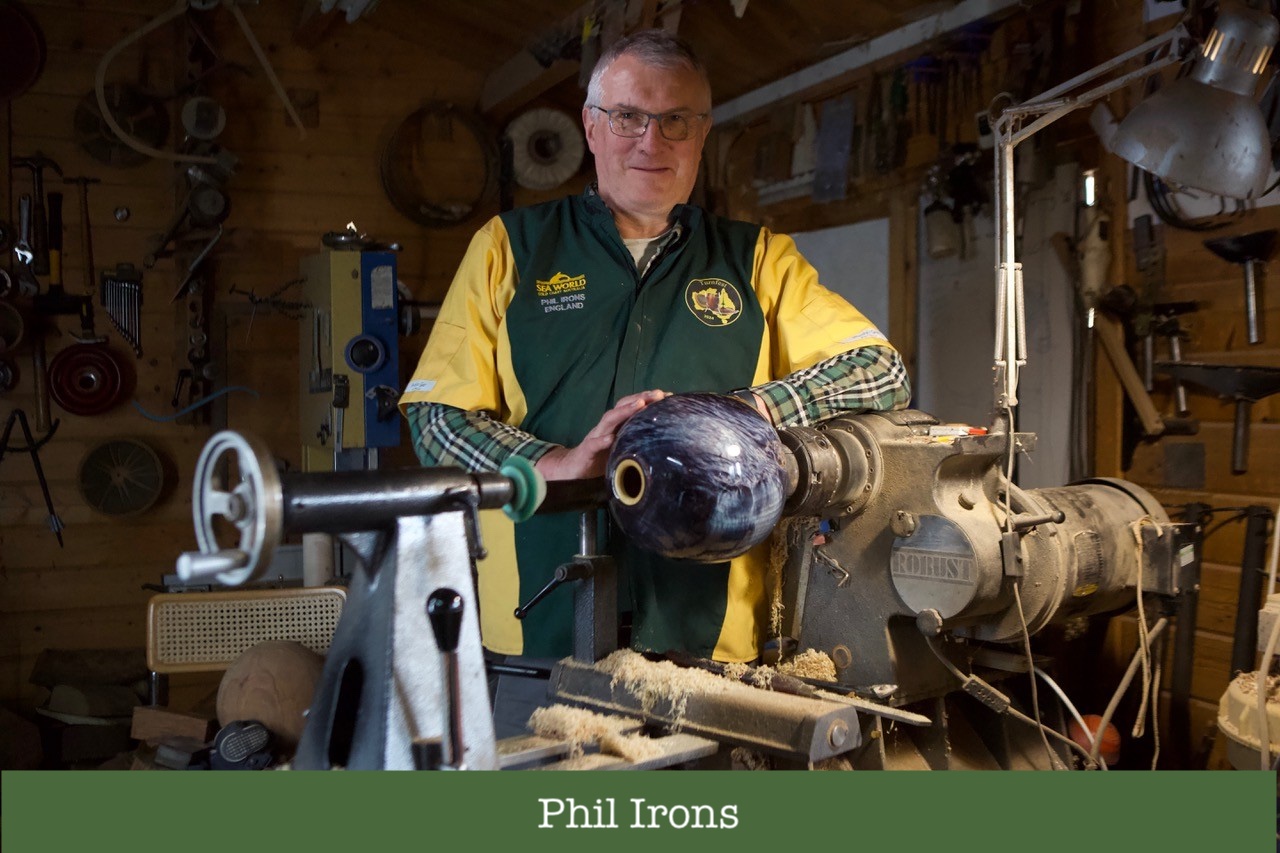



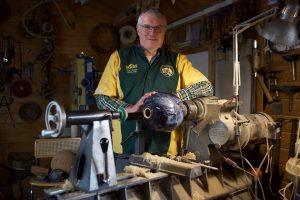
Phil Irons is a world-renowned woodturner recognised for his expertly crafted vessels and hollow forms, distinguished by their clear, fluid shapes and elegant flowing lines.
He employs contemporary, coloured dyes to accentuate the natural beauty and hidden grain patterns of pale woods, which he sources primarily from tree surgeons. In addition to his turned forms, Phil creates unique woodprints from the logs he selects, capturing the raw, unaltered state of the material before transformation. These prints are often displayed alongside the final vessel, offering a compelling visual narrative of the wood’s journey from its natural state to a refined artistic piece.
https://www.philironswoodturning.co.uk/
Livestream Demonstration: Kintsugi for Wood
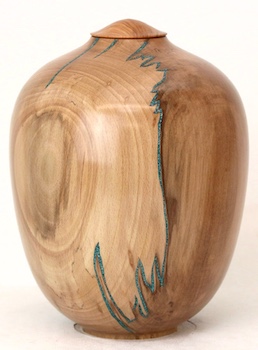 Wood is a natural material, this is what attracts many of us to it in the first place. As a natural material it isn’t consistent and often has within it variations such as voids, bark inclusions and a whole range of other “inconsistencies” (including chainsaw cuts!!).
If I were to search for only “perfect” pieces of timber then frankly I’d never make anything as I would spend all of my time on a Unicorn hunt!
Part of the beauty of the things I make lies in the inclusion and celebration of so called “flaws”. It’s not an approach that I can claim as my own. I refer to this as “Kintsugi for Wood”.
The Japanese tradition of Kintsugi is something that I have been interested in for many years. You can read more about this fascinating subject on the Internet, this article on Wikipedia should get you started:
https://en.wikipedia.org/wiki/Kintsugi
Over the years I have been developing my work I have put together a number of methods that I use to handle a range of “problems” that always seek to celebrate the “wabi-sabi” nature of this fabulous material.
I am looking forward to sharing these techniques with you at the festival. We will explore how I use metal powder, metal leaf, epoxy and holographic particles to create unique works of art.
Livestream Demonstration: HOLLOW FORMS with the KISS principle.
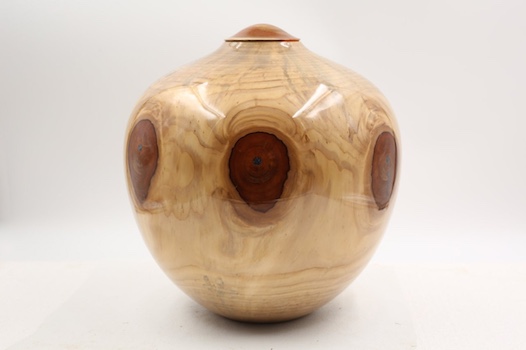
Creating simple forms is quite often not that simple, as with any skill it can take years of practice to make it simple.
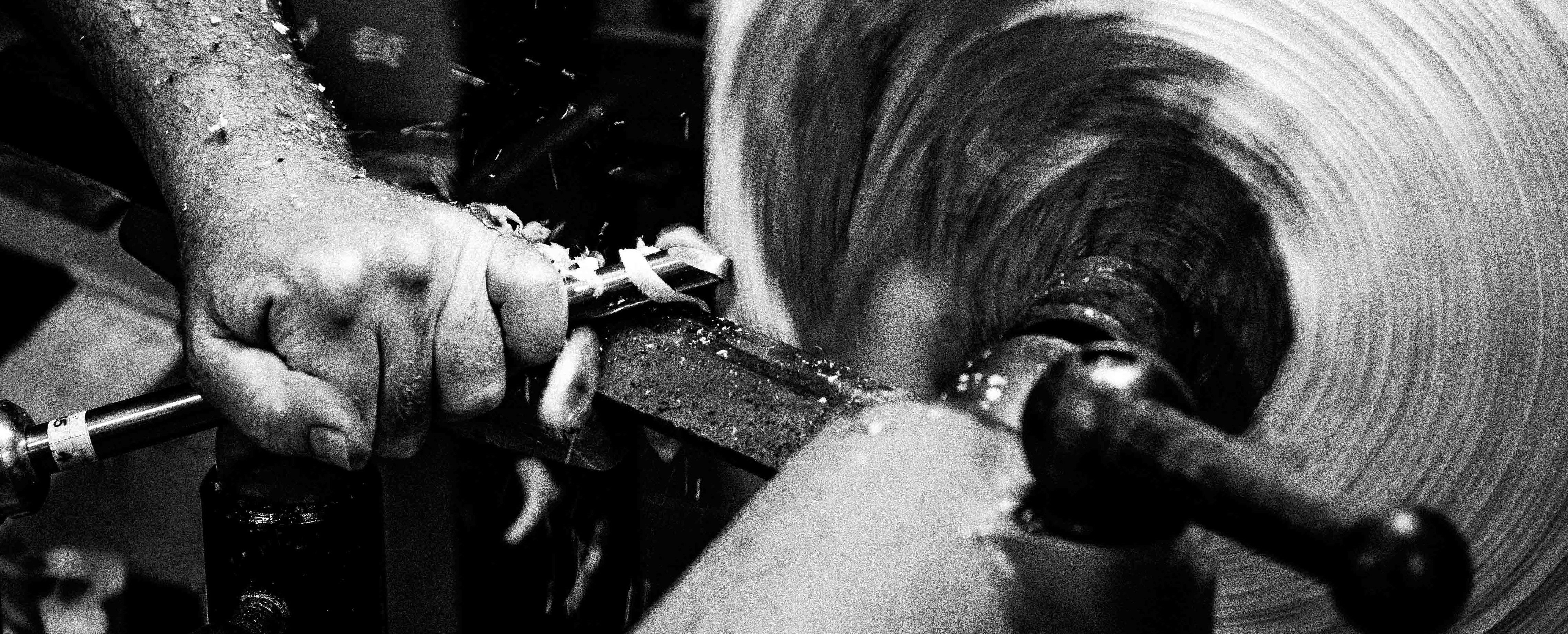
In this demo Phil will show how he goes about creating his simple forms, sharing his knowledge gained over the past 30+ years of making hollow forms with lots of tips and advice. A few of the topics he will cover are the importance of secure chucking, his choice of tools, stance at the lathe, his process for hollowing, through to reversing the piece between centres to safely remove the chuck spigot and a whole lot more.
The KISS principle?
Keep It Simple Stupid. A phrase borrowed from the late Ray Key.